This article may contain affiliate links. If you buy through them, A Home Filled With Love may earn a small commission at no extra cost to you. Learn more.
At an estate sale a few towns over, I once paid two dollars for a heavy black frame with a chipped corner because I liked the weight of it in my hand. I did not have a photograph for it yet. I bought it anyway, brought it home, and set it on the kitchen counter for almost three months before I found the picture that belonged in it, a shot of my son on the porch steps holding a garden hose like it was a fishing rod. That frame still does not match a single other frame in my house, and at this point I would be suspicious of it if it did.
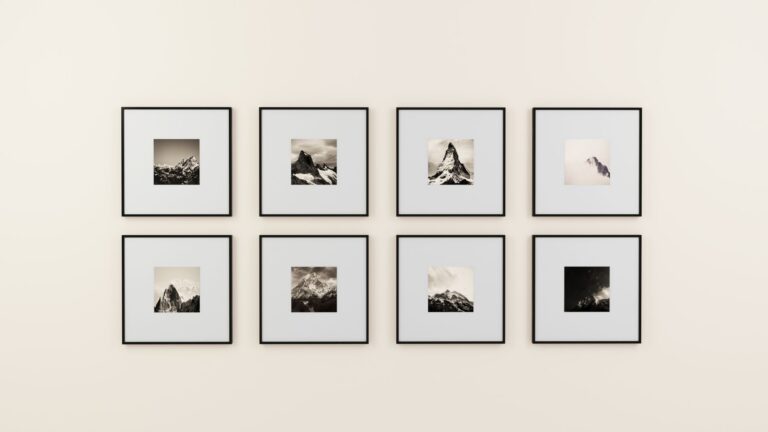
For years I thought that not matching was something to apologize for, a sign that I had not gotten around to buying a proper matching set the way some of my friends had. Rows of identical white frames, all the same size, hung in a perfect grid. It looks lovely in a store display. In an actual home, filled with actual photographs collected over actual years, I have come to think it can look a little like nobody lives there yet.
Where the frames actually come from
If I walk around the house and count, maybe four frames were bought new and on purpose. The rest arrived sideways. A wooden one my father built in his garage the winter he decided he needed a hobby. A silver one my sister gave me for a wedding gift that held her own wedding photo before it held mine. Two plain frames from a hardware store because I needed something quickly and did not have time to shop around. A tin frame with a rooster stamped into the corner that I am fairly sure came from my husband’s mother’s kitchen decades ago.
Each of those has a story attached to it that has nothing to do with the photograph inside. When a guest picks one up and asks about it, which happens more than you would think, I get to tell them about my father’s garage or my sister’s wedding, not just about whoever is pictured. That is something a set of matching frames from a catalog simply cannot give you.
What actually holds a mismatched wall together
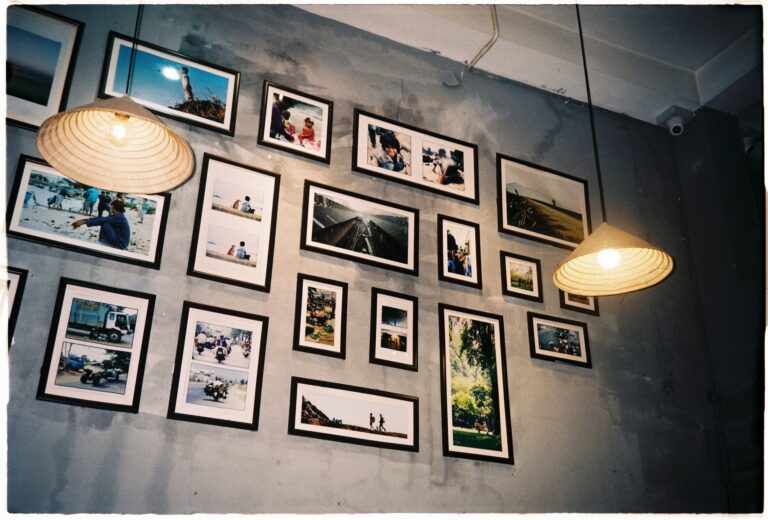
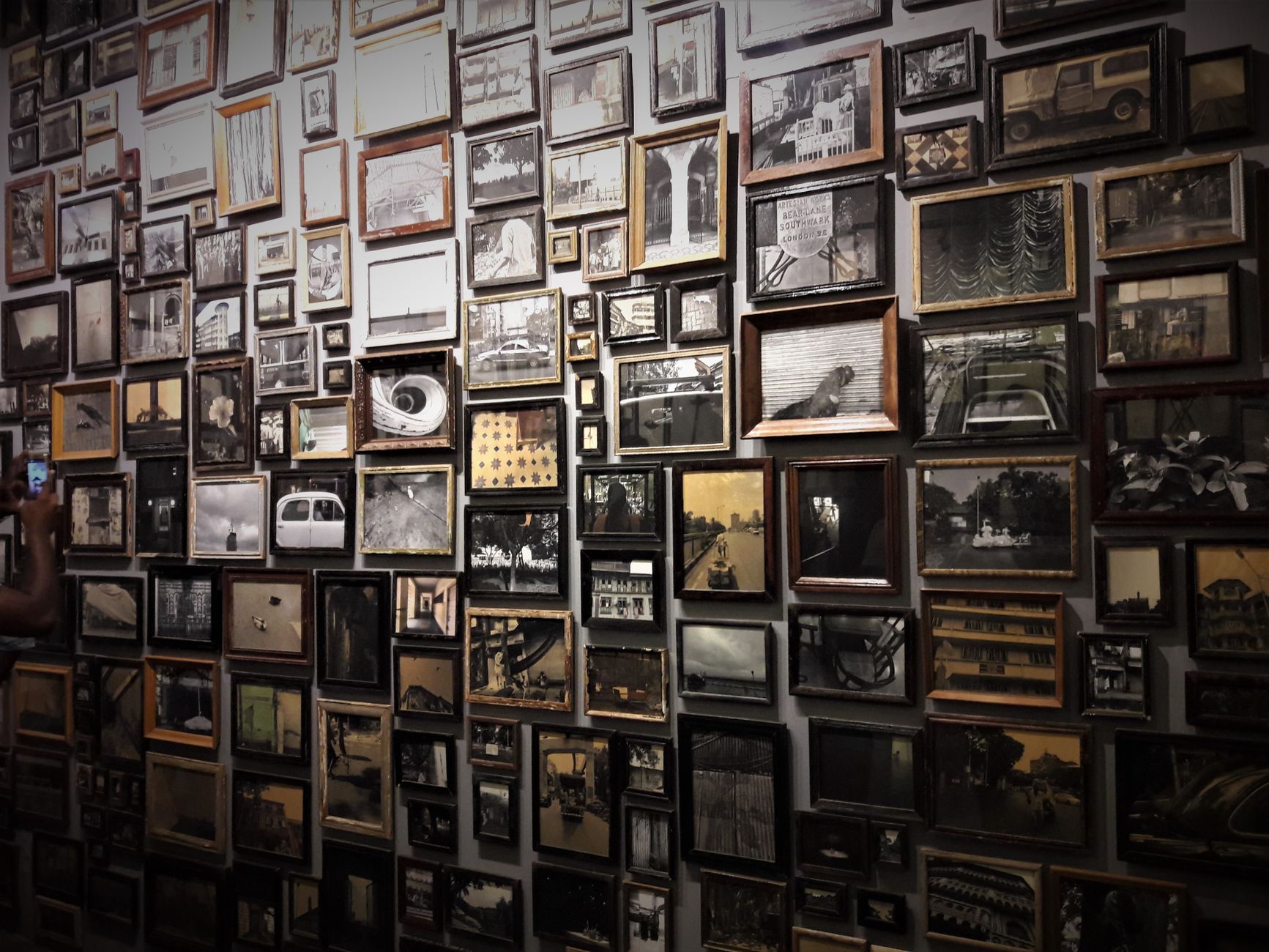
Letting the frames be different does not mean letting the wall be chaos. What I have found keeps a mixed group of frames looking intentional rather than accidental is picking one thing to repeat, even if everything else varies. In my front room, every frame is some shade of wood or brass, no white, no black, no chrome. That single thread running through an otherwise mismatched group is enough for the eye to make sense of it as a collection rather than a pile.
Spacing helps too. I leave roughly the same gap, close to two inches, between each frame no matter how different their sizes or shapes are. Consistent spacing does a lot of quiet work. It tells your eye there was a decision made here, even if the decision was simply to let things be themselves.
My mother used to say a house should look collected, not decorated, and it took me most of my adult life to understand what she meant by that.
The trouble with buying a set
I did try the matching route once, early in our marriage, when I bought a box set of five identical frames from a store because it seemed like the responsible, grown up way to decorate a wall. Filling them felt like a chore rather than a pleasure. I found myself hunting for photographs that would fit the frame instead of the other way around, cropping out parts of pictures I loved just to make them fit a shape that was never built with that photograph in mind.
Within a year, two of those five frames were empty because I could not find anything I wanted badly enough to crop to fit. They sat that way for longer than I care to admit before I finally gave the whole set to a friend who was starting fresh in her first apartment and needed exactly that kind of simple, uniform start. It was the right choice for her. It was not the right choice for a house that already had twenty years of photographs looking for somewhere to live.
How I choose a frame now
These days, when a photograph needs a frame, I go looking through what I already have in the closet before I go looking anywhere else. Sometimes nothing fits and I do buy something new, but I try to buy it for that one photograph specifically, asking what the picture needs rather than what would complete a set. A soft, candid shot of a grandchild asleep on the couch does not want the same frame as a formal photograph from a wedding. Letting each picture ask for its own frame has meant that thirty years in, nothing on my walls matches, and every single piece has a reason for being there.