This article may contain affiliate links. If you buy through them, A Home Filled With Love may earn a small commission at no extra cost to you. Learn more.
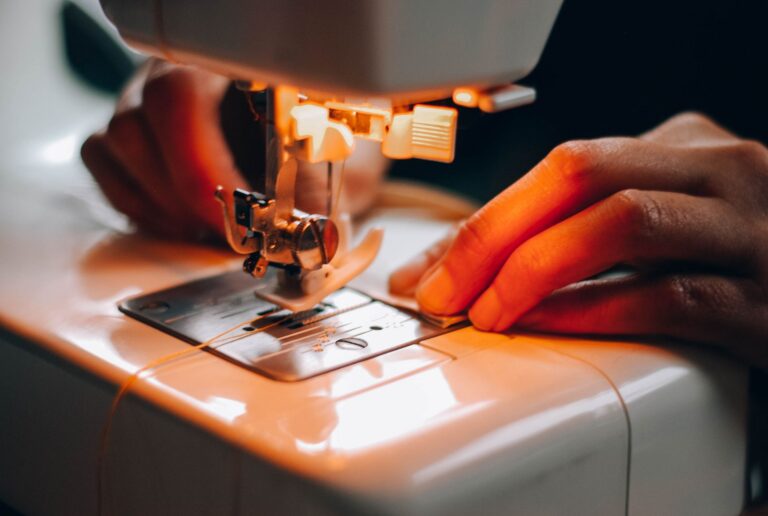
My mother had a drawer full of half finished sewing projects, and for years I assumed that was just how it went. You started something on a rainy afternoon, got to the tricky part, and folded it back into the drawer for later. Later rarely came. When she passed the sewing machine on to me, an old Singer with a wobbly foot pedal, I told myself I would be different. Then I spent three years not touching it at all.
What finally got me sewing was not ambition. It was a torn apron. The one I had worn for a decade, a faded blue thing with a burn mark near the hem from a pan I set down too fast, tore straight through the pocket seam while I was pulling biscuits out of the oven. I stood there holding a tray in one hand and a flapping pocket in the other and thought, enough. I am going to make my own.
Starting with fabric I already had
I did not buy anything new for that first apron. I pulled a yard and a half of cotton from a bag of remnants in the hall closet, leftover from curtains I had made for my sister years before. It was a soft yellow with a thin white stripe, not exactly what I would have chosen from a store, but it was there, and it was free, and that mattered more than I expected. There is something about working with fabric that already has a history in your house. It makes the mistakes feel less costly.
I cut the first pattern piece wrong. I had traced the shape from my old apron laid flat on the fabric, but I forgot to account for the seam allowance, so when I sewed the sides the whole thing came out narrower than my old one by a good three inches. It looked like it belonged on a child. I set it aside, cut a second piece, and this time I added an extra inch all around, which turned out to be too generous. The second apron billowed like a sail. Only on the third try did I get something close to right, and even then the neck strap sat a little crooked.
What the crooked strap taught me
I almost unpicked that strap and redid it. My husband Sal, who has more patience for this kind of thing than I do, told me to wear it for a week before I touched it again. So I did. I wore that lopsided apron to make Sunday sauce, to bread the chicken cutlets my grandmother used to make, to knead a loaf of bread that did not rise properly because I forgot the yeast was old. By the end of the week the crooked strap did not bother me anymore. It had become part of the apron’s shape, the way a person’s face settles into lines from smiling a certain way for years.
I think a lot of us wait for the version of a skill where we already know what we are doing before we let ourselves start. Sewing does not work that way, at least not for me. The apron taught me to run a straight seam because I ran a hundred crooked ones first. It taught me how much ease to leave around a neck strap because I made one too tight and one too loose before I made one that fit.
The actual process, for anyone who wants to try
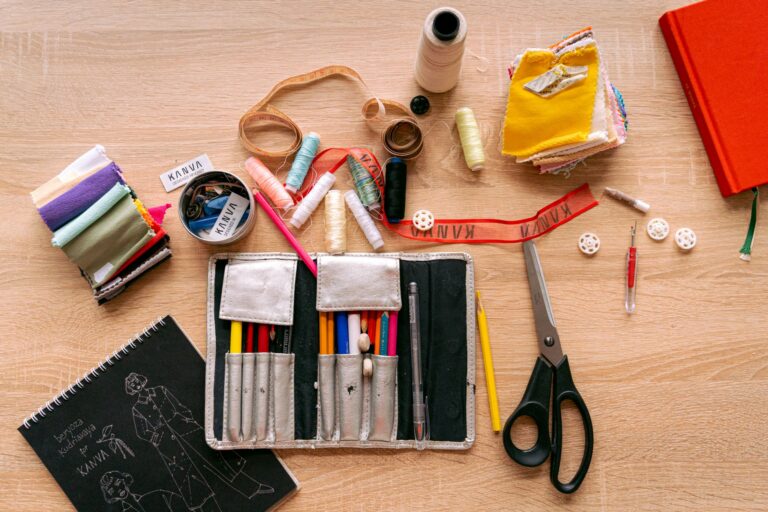
If you want to make a simple apron, you do not need much. A yard and a half of medium weight cotton, a spool of thread that matches or does not, some pins, and a machine that sews a straight stitch. I use a half apron pattern now, just a rectangle for the skirt and a waistband with ties, because the full apron with the neck strap took me three tries to get right and I did not want to relive that every time.
- Cut your fabric rectangle to about 24 inches wide and 20 inches long for the main skirt, adding half an inch on each side for the seam allowance.
- Hem the two long sides and the bottom edge first, folding under a quarter inch twice so the raw edge is hidden.
- Gather or pleat the top edge slightly so it is easier to sew into a waistband.
- Cut a waistband about four inches wide and long enough to tie comfortably around your waist with extra for a bow, usually somewhere between 60 and 70 inches depending on how you like your ties.
- Sew the waistband to the gathered top edge, then fold and stitch the whole band closed, leaving the ties as one continuous piece.
None of this is precise the way a pattern from a store would be. I have made six aprons since that first yellow one, and no two are exactly the same size. My daughter Nora, who is eleven now, wanted one for helping with dinner, and I cut hers shorter so it would not drag under her feet. It has a pocket sewn slightly off center because I misjudged where to place it, and she has never once mentioned it.
An apron does not need to be perfect to keep the grease off your shirt. It just needs to be there, waiting on the hook by the stove, when you need it.
When it goes wrong, and it will
I want to be honest about the parts that do not go smoothly, because most of what I read before I started made sewing sound tidier than it is. Thread will snap in the middle of a seam and you will not notice until you flip the fabric over and find six inches of nothing holding it together. Bobbins run out at the worst moment. I have sewn a pocket on inside out and not caught it until I went to use it and found the seam allowance facing me instead of the fabric.
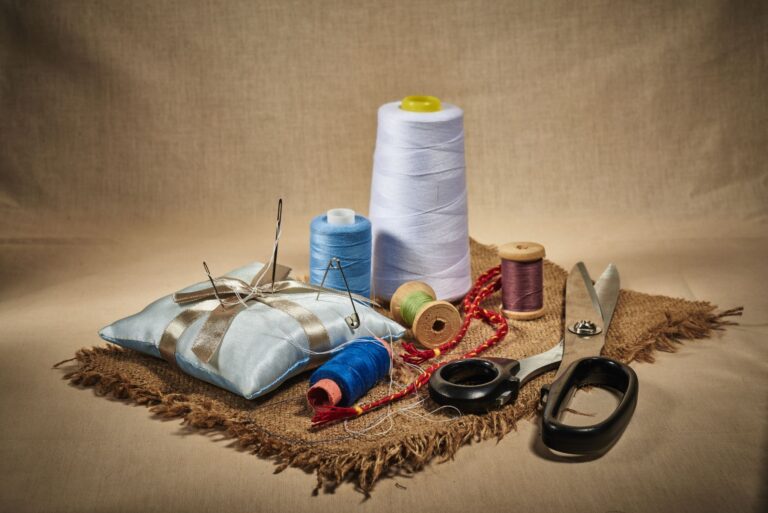
The fix for almost all of it is a seam ripper and patience. I keep mine in a small dish by the machine, next to a pincushion that used to belong to my mother, one of the few sewing things of hers I kept. When something goes wrong, I unpick it, press the fabric flat again with the iron, and sew it a second time. It rarely takes as long as it feels like it will while you are doing it.
Why I keep making them
I do not sell these aprons or give them away as gifts very often, though I have made two for my sister and one for a neighbor who admired the fabric. Mostly I make them because the yellow one wore through at the pocket again last winter, in nearly the same spot as the original apron that started all this, and I liked the apron enough to make a nearly identical replacement rather than buy something new. That felt like a kind of proof that the first one had actually worked, not just as an apron but as a way of learning something with my hands that I could keep using for years afterward.
If you have a machine sitting in a closet somewhere, or even just a needle and thread and an old shirt you do not mind cutting into, I would start there. Not with a pattern that promises perfect results, but with something plain and useful that you will actually wear crooked strap and all.