This article may contain affiliate links. If you buy through them, A Home Filled With Love may earn a small commission at no extra cost to you. Learn more.
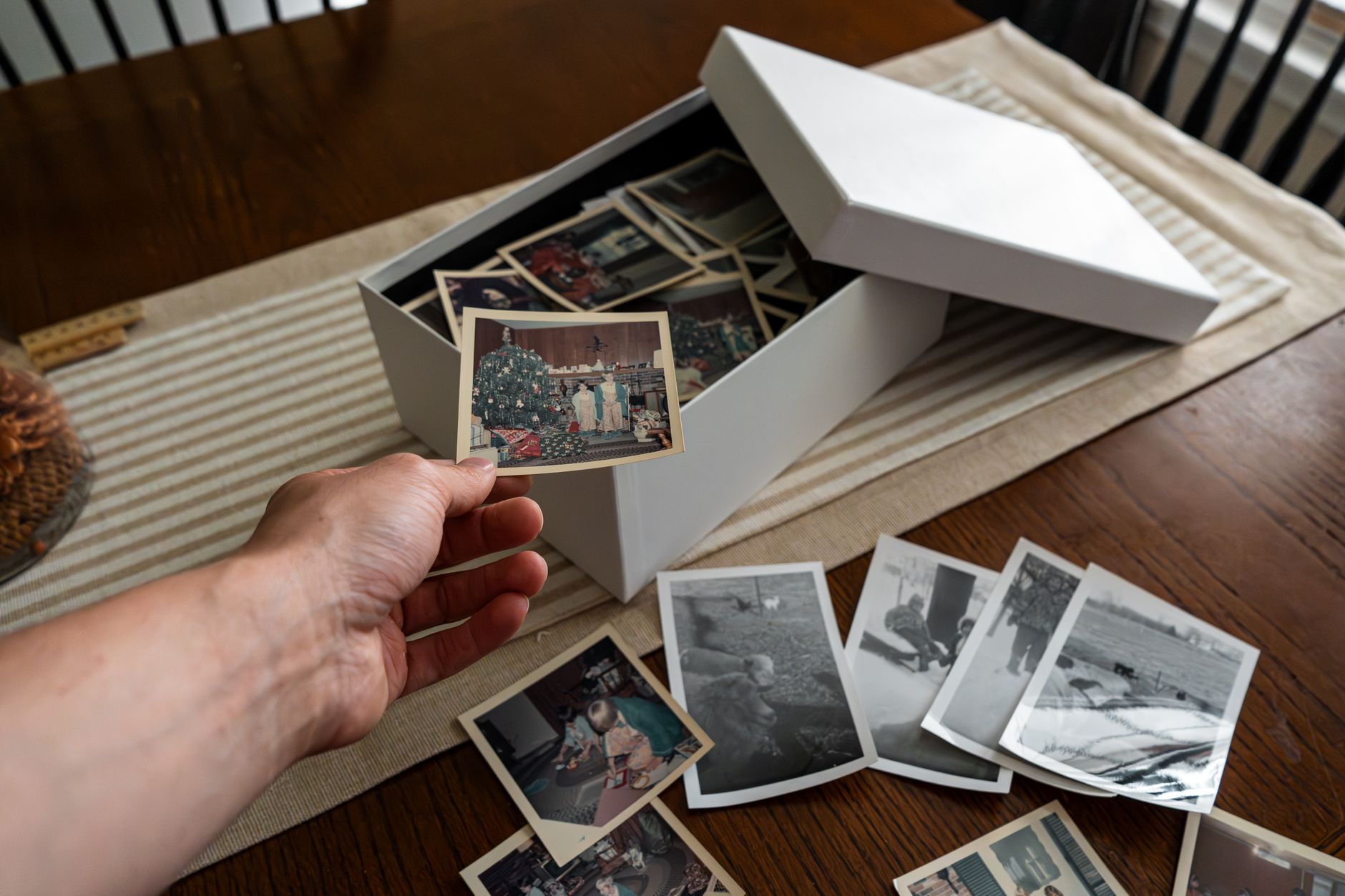
The letters were in a shoebox, which I have since learned is one of the worst possible places to keep paper for fifty years, and also apparently one of the most common. My aunt handed the box to me at her kitchen table after my uncle passed, saying she did not have the heart to go through it herself and thought I might. Inside were maybe sixty letters, most of them written between my grandfather and grandmother during the two years he was stationed overseas before they married, plus a handful from cousins and friends whose names meant nothing to me at all.
I did not read them in order that first night. I could not help myself and just opened whichever ones were on top, and I regret that a little now, because reading them out of sequence made the story harder to follow than it needed to be. If I had it to do again, I would have sorted by date before reading a single word.
Sorting before anything else
Once I slowed down, I laid every letter out on my dining room table by postmark, which took an entire Sunday afternoon and left me with a system of small paper piles that my husband was under strict instructions not to touch. Some envelopes had no postmark at all, or one too smudged to read, and for those I looked at the letter’s content for clues, a mention of weather, a holiday, a birthday. I was not always right about the order, but I got close enough that reading them start to finish actually told a story rather than a scattered set of moments.
My grandfather was not a naturally talkative man in person, at least not in the years I knew him, so it startled me to read pages of him describing the mess hall food or asking after my grandmother’s sister by name, teasing her gently about a boy she liked. He wrote three or four pages some weeks. I do not think I have written anyone three pages of anything in my adult life.
What I chose to keep and how
The paper itself was already fragile in places, soft at the folds where sixty years of being opened and closed had worn the fibers thin. I bought acid free folders and a flat storage box meant for documents rather than a shoebox, and I stopped folding and unfolding the most delicate ones altogether, choosing instead to photograph each page so I would not have to keep handling the original. That was a compromise I made peace with slowly. Part of me wanted to keep reading the actual paper every time, holding what my grandfather had held, but the letters were not going to survive many more decades of that kind of handling.
I typed up transcriptions of the ones that meant the most to me, partly because some of my grandfather’s handwriting had become difficult to read as the ink faded, and partly because I wanted a version my cousins could read on a screen without me having to mail around fragile originals. I kept the transcriptions plain, no corrections to his spelling or his occasional crossed out word, because those small imperfections told me as much about him as the sentences themselves did.
My aunt told me that my grandfather rewrote his most important letters twice before mailing them, and that the crossed out drafts, when they survived at all, were sometimes more honest than the clean copies.
Sharing without giving everything away
I did not keep all sixty letters in my own house. Some went back to my aunt, some I copied for a cousin in another state who had never seen them, and a few I have not yet decided what to do with because they mention people I cannot identify and I am reluctant to throw away anything I do not fully understand. That reluctance has slowed me down, and I have made peace with being slow about it.
What surprised me most, going through the box, was how much of my grandparents’ actual courtship I had never heard a single word about growing up. Family stories get worn smooth over the years, the same way a stair rail gets worn smooth by hands, until only the simplest version survives telling after telling. The letters had all the rough edges still in them, the small arguments, the boredom, the ordinary days alongside the important ones. I think that rough version is worth more than the smooth one, even though it takes longer to read and longer still to make sense of.
I have started writing actual letters again myself, to my own children away at school, not because I expect anyone to save them in a shoebox someday, but because I understand now what gets lost when nobody writes anything down at all.