This article may contain affiliate links. If you buy through them, A Home Filled With Love may earn a small commission at no extra cost to you. Learn more.
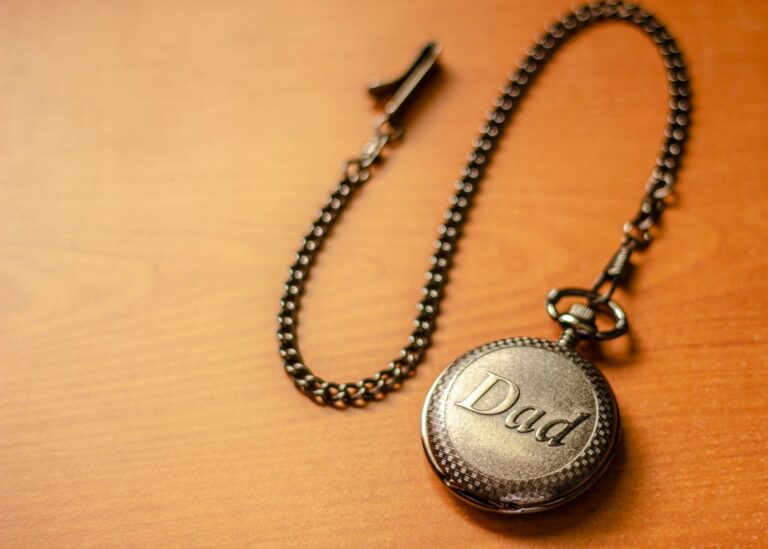
My father’s watch stopped running the week he died, which is the kind of detail that sounds invented when I say it out loud, but it is simply true. It sat in a drawer for almost four years after that before I brought myself to do anything with it, mostly because I was not sure whether fixing it would feel like bringing something back or whether leaving it stopped was somehow more honest about what had happened.
I eventually decided that a watch that does not run is really just jewelry, and my father was never a man who wore jewelry for its own sake. He wore that watch because it told him the time, reliably, for close to thirty years, and I thought he would rather it kept doing that than sit silent in a drawer as a kind of shrine.
Finding someone who works on old mechanisms
It is a wind up watch, not battery powered, which narrowed my search for someone to repair it considerably. Most jewelry counters in town could replace a battery in an afternoon but had no one on staff who understood the inside of a mechanical movement. I found a watchmaker two counties over, an older man who worked alone out of a small shop that had clearly not been redecorated since sometime in the previous century, and I liked him immediately for that.
He opened the back of the watch right there at his counter while I waited, and told me the movement itself was in decent shape, but that it needed cleaning and a new mainspring, and that one of the jewels inside had worn slightly, which is apparently normal after decades of daily winding. He did not try to sell me on anything I had not asked for. He quoted me a fair price for the work and told me honestly that a watch this old would likely need similar attention again in another twenty years or so, which felt like a reasonable trade for something that had already run for thirty.
Deciding what to preserve and what to let go
The crystal, the glass covering the face, had a scratch across it that I actually asked him not to replace. That scratch happened, according to my mother, the same summer I learned to ride a bicycle, when my father set the watch down on a workbench edge while helping me fix a chain. I did not want a clean new crystal in its place. He seemed to understand without much explanation, and simply polished around the scratch rather than replacing the glass entirely.
The leather band was a different matter. It had cracked and hardened past any reasonable repair, and no amount of sentiment was going to make cracked leather comfortable against my wrist. I replaced it with a new band close in color to the original, which the watchmaker helped me pick out from a small selection he kept in a drawer. It was the right call, I think, even though it meant one part of the watch is now entirely new. A watch you cannot actually wear is not really preserved. It is just stored.
He told me that people bring him watches all the time wanting them fixed exactly as they were, and that the ones that end up worn again, rather than back in a drawer, are almost always the ones where the owner let him make a few practical changes.
Wearing it now
I wear the watch most days now, though not every day, since it does need winding by hand each morning and I sometimes forget. When I do remember, winding it has become a small ritual, a minute or two in the morning where I think about my father without really trying to. I did not expect that. I thought fixing the watch would be a onetime task, something I did once and then simply had. Instead it turned into something ongoing, a small daily act that keeps his memory present in a way that leaving the watch stopped in a drawer never did.
My son noticed it on my wrist at dinner a few months ago and asked whose watch it was, and I told him the whole story, the stopped hands, the four years in the drawer, the scratch from the bicycle summer, the watchmaker who understood which parts to leave alone. He asked if he could wear it himself someday. I told him that was already the plan, though I am not in any hurry to hand it over. Some things are worth keeping a while longer before they move on to the next set of hands.